Imagiologia e Diagnostico por Imagem
Small Animal Radiographic Techniques and Positioning
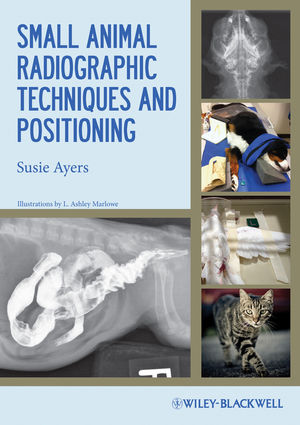
De: Susie Ayers
ISBN: 9780813811529
2012, Wiley
Capa mole
Páginas: 268
Imagiologia e Diagnostico por Imagem
De: Susie Ayers
ISBN: 9780813811529
2012, Wiley
Capa mole
Páginas: 268
Small Animal Radiographic Techniques and Positioning is a practical, clinically applicable manual designed to aid veterinary technicians and nurses in correcting common artifacts in both film and digital radiography and in positioning the small animal patient for clear and consistent radiographs. Detailed positioning techniques are provided for each commonly radiographed body segment, including positioning aids, alternative restraint methods, and examples of the corresponding correct or incorrect radiographs. Species covered include dogs, cats, birds, and common exotics.
The book begins with an overview of radiographic technique, darkroom maintenance, digital and film-screen imaging, then offers a section on small animal positioning, including some exotic species positioning techniques, with the final section presenting information on contrast media and special contrast enhanced procedures. A companion website provides the images from the book in PowerPoint and study questions and answers at www.wiley.com/go/ayers. Highly illustrated, Small Animal Radiographic Techniques and Positioning is a complete resource for any veterinary technician or student to quickly find imaging information and improve the clarity of small animal radiographs.
Foreword xi
Preface xiii
Acknowledgments xv
Section 1. Theory and Equipment 3
1. Introduction to Digital Imaging 5
Definition and Principles of Digital Imaging 5
Digital Radiography 6
Digital Imaging Communications in Medicine 6
Picture Archiving and Communication System 6
Workstation Monitors 7
Computed Radiography 10
Direct and Indirect Conversion Radiography 11
Digital Image Processing 12
2. Principles of Film-Screen Radiography 17
X-ray Film Construction 17
Intensifying Screens 18
Common Principles of Film-Screen and Digital Radiography 20
3. The Radiographic System 21
Basic Component Overview 21
X-ray Tube 21
Fluoroscopy 24
Secondary or Scatter Radiation 25
Grids 27
Milliamperage and Kilovoltage 28
Technique Chart 28
Overexposure vs. Underexposure 32
Patient Log 33
4. Darkroom Maintenance and Film Processing 37
Darkroom Setup 37
Manual Film Processing 38
Automatic Film Processing 39
Automatic Film Processor Maintenance 41
Silver Recovery Cartridges 42
Safelights 42
Film Storage and Handling 43
Patient Identifi cation Labeling 44
Care and Maintenance of Film Cassettes 45
5. Film-Screen and Digital Imaging Artifacts 49
Exposure Artifacts 49
Darkroom Processing Artifacts 52
Film Storage Artifacts 54
Digital Imaging Artifacts 54
6. Positioning Aids and Alternative Restraint 57
Safe Use of Restraint Devices 57
Sedated Patient Restraint 59
7. Radiation Safety 61
Health Physics 61
Radiologic Units 61
ALARA Concept 65
Section 2. Radiographic Positioning 69
8. General Principles and Terminology 71
Positioning Terminology 72
Room Setup 74
Patient Preparation 74
Horizontal Beam Views 76
9. Small Animal Positioning—Forelimb 79
Scapula 79
Shoulder 82
Bicipital Groove 85
Humerus 87
Elbow 90
Radius and Ulna 94
Carpus 95
Metacarpus, Digits 100
10. Small Animal Positioning—Pelvis and Hind Limb 103
Pelvis 103
OFA Imaging 109
PennHIP Information 111
Femur 114
Stifle 117
Tibial Plateau Leveling Osteotomy (TPLO) 123
Tibial Tuberosity Advancement (TTA) 127
Tibia and Fibula 129
Tarsus 133
Metatarsus and Digits 138
11. Small Animal Positioning—Spine 143
Cervical Spine 144
Thoracic Spine and Thoraco-Lumbar Spine 149
Lumbar Spine 152
LS Spine 155
Sacrum 159
Caudal Spine 160
12. Small Animal Positioning—Thorax, Soft Tissue Neck, and Abdomen 163
Thorax 163
Soft Tissue Neck 166
Abdomen 167
13. Small Animal Positioning—Skull 171
Cranium 171
Nasal 174
Maxilla 179
Mandible 183
Temporomandibular Joints 187
Tympanic Bullae 191
14. Exotic Pet Imaging 197
Avian 197
Small Mammals 200
Reptile 202
Section 3. Contrast Media and Special Procedures 207
15. Radiopaque Contrast Media 209
Types of Radiopaque Contrast Media 209
Ionic and Nonionic Contrast Agents 209
Barium Sulfate 213
16. Special Imaging Procedures 215
Special Procedure—Esophagram (Static) 215
Esophagram—Fluoroscopic/Dynamic 216
Special Procedure—Upper GI 217
Special Procedure—Gastrogram 219
Special Procedure—Lower GI—Barium Enema 221
Special Procedure—Excretory Urogram 222
Special Procedure—Cystography 225
Special Procedure—Urethrography 230
Special Procedure—Vaginography 231
Special Procedure—Myelography 233
Special Procedure—Myelography—Avian 236
Special Procedure—Myelography—Rabbit 237
Special Procedure—Fistulography 238
Special Procedure—Arthrography 239
References 241
Webliography 242
Index 243
Mary H. (Susie) Ayers, BBA, RT(R) is the senior radiologic technologist at the Virginia-Maryland Regional College of Veterinary Medicine at Virginia Tech, with over 23 years of experience working in veterinary medicine.